



The Constitutional Court rejected the modifications brought to the Criminal Codes, because the Parliament did not fully transpose the previous decisions of the Court related to the unconstitutionality of certain criminal matters, while it had no right to choose among the decisions of the Court.
The Constitutional Court made public on Thursday its reasoning behind its admission of the challenges filed by USR (Save Romania Union), PNL (National Liberal Party) and President Klaus Iohannis on July 29, and rejected the modifications brought by the Parliament to the Criminal Code and the Criminal Procedure Code.
"With regard to the effects of this decision, the Court holds that, in what concerns the procedure for agreeing a law/norm declared unconstitutional with a decision of the Constitutional Court, the Parliament, in principle, has the right to decide whether to modify that law/norm strictly as ruled by the Court, or to decided to no longer change the text in question, by eliminating the norm or even by rejecting the law. However, when a decision of the Constitutional Court pronounced a posteriori interposes, by which the norm in force, which is the subject of the modification, has been declared unconstitutional, the Parliament has some restrictions to observe. In such a case, the Parliament is obliged, once the procedure of modifying the law has been initiated in order to comply with the Constitution, to adopt the rules transposing the judicial act of the Court and eliminate such found vices of unconstitutionality. If these things are interpreted otherwise, it would mean that, in the application of art.147 paragraphs (1), (2) and (4) of the Constitution, the legislator, within the procedure of agreeing the law with the decisions of the Constitutional Court, has a right to choose among them, being thus able to even maintain the norms found unconstitutional, which cannot be accepted," reads the CCR reasoning.
In CCR's decision, the process of re-examining a law necessarily implies a loyal conduct by the Parliament and an applied and responsible analysis of all the texts declared unconstitutional, by reference to the decision's considerations.
The CCR shows that, in the procedure for transposing two decisions of the Court - Decision no. 368 of May 30, 2017 and Decision no. 405 of June 15, 2016, the Parliament did not respect the binding character of those decided by the Court, the rules adopted canceling the effects of these jurisdictional acts.
"Following the deliberations, the Constitutional Court, by unanimous vote, admitted the constitutionality challenge and found that the Law for the modification and supplementation of Law no. 286/2009 on the Criminal Code, as well as Law no. 78/2000 for the prevention, discovery and the sanction of corruption acts is unconstitutional as a hold. Therefore, the Court held, in essence, that, in the process of reviewing the law, the Parliament did not fully transpose the decisions of the Constitutional Court in criminal matters. As a result, the Court found that the criticized law violates Article 147 paragraph (2) of the Constitution," said CCR.
Why CCR rejected modifications to Criminal Codes: Parliament has no right to choose among Court's decisions
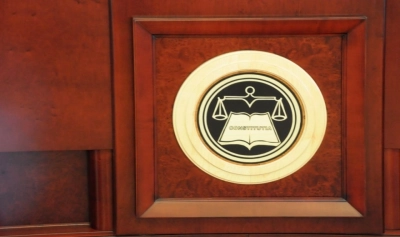
Sursă foto: www.ccr.ro
Distribuie articolul


Distribuie articolul



Articole Similare

10
Middle East Crisis/Repatriation - evacuation flights planned, but open airspace required (Foreign Affairs spokesperson)
10

10
PM Bolojan: The more the Gulf crisis deepens, the greater the impact on fuel prices
10
5
Senate passes bill declaring 2026 as National Peasant Party Centenary Year
5

18
Romanian senior interior official, U.S. prosecutor discuss border security
18

14
DefMin Miruta meets European Parliament President Metsola
14

12
Ionescu(INFP):Seismic alert system can send warnings about 25 seconds before waves arrive in Bucharest
12

12
Coface Romania's Nichisoiu: Romania may become Europe's energy exporter, yet with no local demand
12

14
Serious road traffic accidents in Romania down 60pct from 2019
14

15
Bulgaria's National Day celebrated at the Romanian Parliament, the world's second-largest administrative building
15

9
CFA Romania president: Mideast conflict hits stock markets and interest rates, stronger impact if it drags on
9

22
ANCOM consults market on future use of 26 GHz, 42 GHz and 28 GHz frequency bands
22

11
World Obesity Day/College of Physicians president pleads for obesity combat programme
11

10
Livestream from Dumbravioara stork nests resumes 20 years after Romania's first such broadcast
10
















Comentează