



President Klaus Iohannis believes that the situation in the Black Sea Extended Region is currently characterised by volatility and is marked by the existence of conflict potential, trends that will, most likely, persist on the short and medium term.
"Over the recent years, the actions of some non-state entities and factors on the security environment have given the notions of national and global security two new attributes, of complexity and interdependency. Furthermore, the transnational nature of several threats to security require the cooperation of the riparian states in the Black Sea area. At present, the security situation in the Black Sea Extended Region is characterised by volatility and is marked by the existence of conflict potential, trends that will, most likely, persist on the short and medium term. The regional geostrategic landscape is also influenced by a series of current threats and challenges, such as international terrorism, hybrid war, (...) frozen conflicts, migration crisis, cyber and communications attacks. In such a complex and dynamic context, the use of all means of international communication, including academic partnerships, free debates, cooperation, transparency and dialogue, is so much more important. The states in the Black Sea Region need all these instruments to sustainably promote the interests that bring them together and to shape up a common vision regarding a stable and predictable security climate, open to progress and participatory democracy," Iohannis underscores in the message sent on Monday, on the occasion of launching the 2018 edition of the "Security in the Black Sea Region. Common Challenges, Sustainable future" programme.
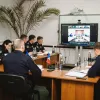
The President's message was read by Mihai Somordolea, state adviser with the National Security Department and secretary of the Supreme Council for National Defence.
"No country has the power or resources to solve on its own the complex issues the contemporary world is confronted with. That is why the solution of counteracting the risks and threats to global, European security, as well as to the security in the Black Sea region, consists of intensifying international cooperation, based on the observance of the international law norms. The main elements making up Romania's strategic profile set up the premises for an intensified regional cooperation and consist of our country's contributions to the security area, under the cooperation formats we are part of, the demarches to consolidate own capabilities, as well as assuming a constructive role, of regional and European binding agent. At the same time, strengthening the economic dimension of regional collaboration can bring benefits to the countries in the region, as well as to other interested states. The Black Sea represents now, same as in the past, a significant connecting bridge between Europe, the Middle East and Central Asia, with the possibility to capitalise on the Danube as transit corridor to Central Europe, the Baltic Sea region and towards the Mediterranean Sea," Iohannis also shows.
In conclusion, the head of state voices his support for the efforts to promote regional partnerships and initiatives devoted to identifying and efficiently approaching the security challenges the Black Sea region is confronted with, taking into account that European states have the role of preserving the stability in this area.
Iohannis: Security situation in Black Sea Extended Region, characterised by volatility
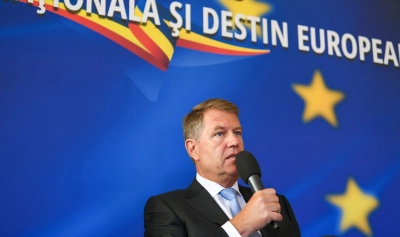
Sursă foto: stiripesurse.ro
Distribuie articolul


Distribuie articolul

Explorează subiectul

București 9°C
9°C
9°CArticole Similare

14
INS: Romania counts 113,303 enterprise groups in 2024, 108,401 of them multinationals
14

16
Survey: 75% of Romanian employees feel financial pressure, over a third seek extra income
16
18
PM Bolojan: Romania does not need a political crisis at the moment, it needs stability
18

21
Hanwha Aerospace allocates 1.3 billion euro to strengthen Romania's sovereign defence capabilities
21
18
ForMin Toiu attends informal meeting of the Foreign Affairs Council in Kyiv
18

13
Project on effective use of EU funds, sustainable development to be launched in Bucharest
13
16
Albanian PM: Aims to conclude EU accession talks by 2027, join by decade's end
16
11
PM Bolojan: EU's eastern border must be stronger; we need to strengthen both military and economic security
11

13
INTERVIEW/U.S. ambassador to Bucharest: Our partnership has never been stronger, we aim to advance economic opportunities
13

17
Number of building authorisations issued for residential buildings down 8.4% in January-February
17
13
Prime Minister Bolojan warns of tougher 2026, cites Middle East impact on economy
13

19
PM Bolojan and EC Executive Vice-President Minzatu discuss boosting PNRR commitments and cohesion funds
19
35
Bolojan: Government to cut fuel excise, diesel prioritised
35












Comentează